Every 30 seconds in Rocket League, two cars collide at center field. For most players, this moment represents pure chaos—a scramble for possession where luck determines outcome. But watch any RLCS match closely, and you'll notice something different. When Jstn lines up for a kickoff, there's nothing random about his approach. His car positioning, boost timing, and flip execution follow a predetermined script that's been practiced thousands of times.
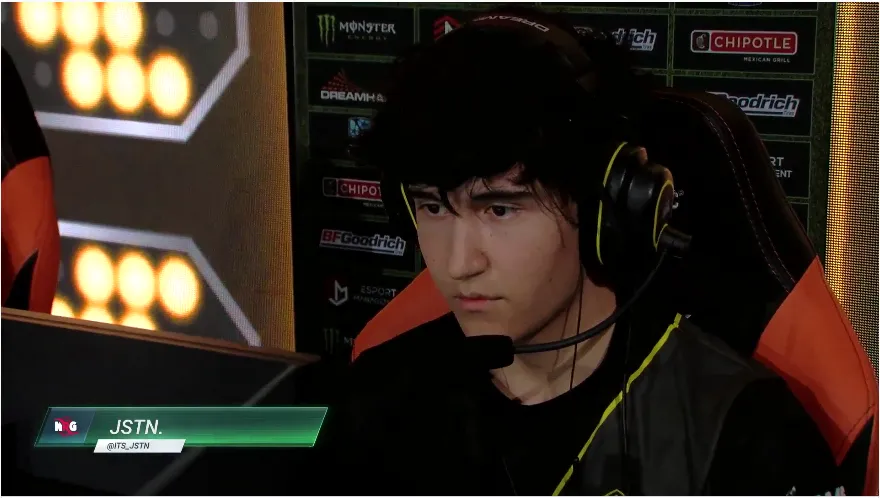 Photo: Jstn, via i.redd.it
This isn't just mechanical muscle memory. It's strategic intelligence applied at the micro level.
The Chess Opening Mindset
Professional players approach kickoffs like chess masters approach opening moves. Every position on the field—diagonal left, diagonal right, straight center—has its own optimal response tree. The difference between amateur and professional kickoff play isn't reaction speed; it's preparation depth.
Fairy Peak, widely considered one of the most consistent kickoff specialists in RLCS history, has spoken about treating each face-off position as a unique mechanical challenge. His diagonal kickoffs use different flip timing than his center kickoffs, not because the physics demand it, but because the strategic outcomes change based on field position.
 Photo: Fairy Peak, via liquipedia.net
This systematic thinking extends beyond individual mechanics into team coordination. When NRG runs their signature fast kickoff setup, Arsenal's positioning isn't reactive—it's predetermined based on which kickoff variant Jstn is executing.
 Photo: Arsenal, via static0.footballfancastimages.com
Configuration Framework for Strategic Kickoffs
The mechanical foundation of strategic kickoffs starts with controller configuration, but not in the way most players think. Elite players don't just bind air roll and boost for comfort; they optimize their bindings for kickoff-specific inputs.
Boost Timing Configuration
Most Diamond players hold boost throughout their kickoff approach, burning 30-40 boost before contact. Professional players use what coaches call "pulse boosting"—brief boost taps timed to specific visual markers on the field. This technique requires binding boost to a finger that can execute rapid on-off sequences without disrupting flip timing.
Jstn's controller setup allows him to pulse boost with his right index finger while maintaining flip control with his thumb. This separation isn't accidental—it's designed specifically for kickoff optimization.
Camera Positioning for Reads
While camera settings discussions usually focus on general gameplay, kickoffs demand specific visual information. Professional players often use slightly higher camera distances during kickoffs to track opponent approach angles. This isn't about copying pro camera settings wholesale; it's about understanding why certain visual configurations provide strategic advantages.
The key insight: kickoffs are reading competitions disguised as mechanical challenges. Better visual information leads to better strategic decisions.
The Mental Model Shift
What separates reactive players from strategic players isn't mechanical skill—it's mental framework. Reactive players respond to what they see. Strategic players execute plans based on what they've prepared for.
Pre-Game Kickoff Analysis
Before high-stakes matches, RLCS teams analyze opponent kickoff tendencies. They're not just looking at mechanical execution; they're mapping decision trees. If Player X goes for a speed flip from diagonal right, what's their most common follow-up? How does their team position for the second touch?
This level of preparation might seem excessive for ranked play, but the underlying principle applies at every level. Instead of treating each kickoff as an isolated event, start recognizing patterns in your opponents' approaches.
Tiered Implementation System
For players looking to implement strategic kickoff thinking, the key is gradual complexity increase:
Tier 1 (Diamond-Champion): Master one kickoff variant per position. Focus on consistency over variety. Choose diagonal kickoffs that complement your playstyle and practice them until they're automatic.
Tier 2 (Champion-Grand Champion): Add opponent reading to your repertoire. Start recognizing opponent kickoff patterns and adjusting your approach accordingly. This isn't about complex mind games; it's about basic pattern recognition.
Tier 3 (Grand Champion-SSL): Develop team-specific kickoff strategies. Coordinate with teammates to create advantageous post-kickoff positioning. This requires communication and practice, but the strategic payoff is significant.
Beyond Individual Mechanics
The most sophisticated aspect of professional kickoff play isn't individual execution—it's team coordination. When G2 runs their defensive kickoff setup, every player knows their positioning before the ball drops. This isn't improvisation; it's rehearsed strategy.
For competitive players, this means thinking beyond personal kickoff mechanics toward team systems. Even in solo queue, understanding common kickoff follow-up patterns helps you position advantageously for second touches.
Practice Integration
Transforming kickoff approach from reactive to strategic requires specific practice methodology. Traditional kickoff training focuses on mechanical consistency—hitting the ball cleanly, maintaining boost efficiency, winning the 50/50. Strategic kickoff practice adds decision-making layers.
Start each training session with five minutes of kickoff scenario practice. Don't just practice hitting the ball; practice reading approach angles, timing boost usage, and positioning for follow-up touches. This builds the pattern recognition that enables strategic thinking during matches.
The goal isn't to become a kickoff specialist overnight. It's to shift your mental approach from chaos management to strategic execution. Every kickoff becomes an opportunity to gain positional advantage rather than simply avoid disadvantage.
When you start treating kickoffs as strategic moments rather than mechanical challenges, you're thinking like a professional player. The mechanical skills will follow, but the mental framework comes first.