Grip Science: How Elite NA Pros Hold Their Controllers to Unlock Impossible Mechanics
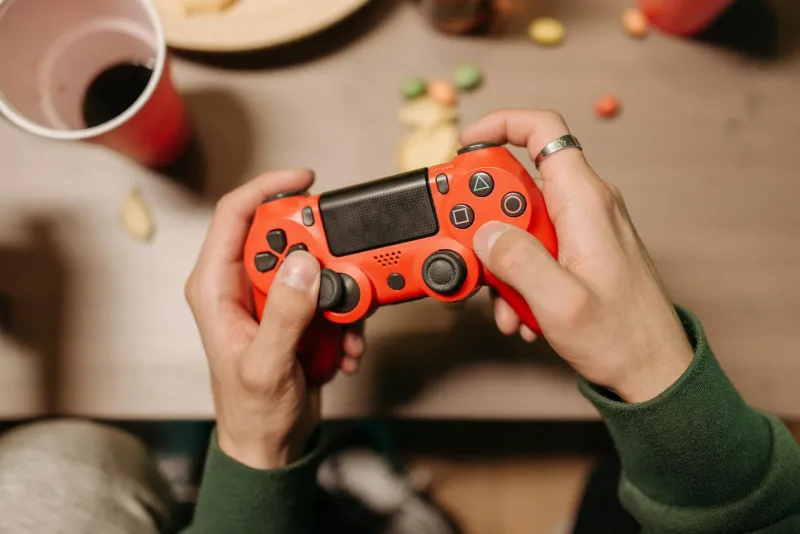
Grip Science: How Elite NA Pros Hold Their Controllers to Unlock Impossible Mechanics
While the Rocket League community obsesses over deadzone values and camera angles, there's a fundamental aspect of elite play hiding in plain sight: how the world's best players actually hold their controllers.
After analyzing dozens of hours of handcam footage from NA's top RLCS talent, a clear pattern emerges. The difference between hitting flip resets in training packs versus nailing them under pressure isn't just mental—it's physical. And it starts with how your fingers make contact with the controller.
The Foundation: Index Finger Architecture
Watch jstn's handcam during any high-stakes aerial sequence, and you'll notice something most players miss entirely. His index fingers don't just rest on the bumpers—they're positioned with surgical precision.
"Most players treat their index fingers like they're just there for air roll," explains one mechanical coach who's worked with multiple RLCS players. "But elite pros use them as anchor points for their entire grip structure."
The key insight? Top players maintain what ergonomics experts call a "neutral wrist position" even during the most demanding mechanical sequences. This isn't accident—it's the result of thousands of hours conditioning their grip to support precision under pressure.
Arsenal's handcam footage reveals another crucial detail: his index fingers maintain consistent pressure throughout complex aerial chains. While most players unconsciously adjust their grip mid-sequence (often tightening up during difficult maneuvers), Arsenal's finger positioning remains virtually unchanged whether he's going for a simple aerial or attempting a ceiling shot musty.
Middle Finger Mechanics: The Overlooked Variable
Here's where things get interesting. Analysis of Chronic's controller grip shows his middle fingers doing far more work than the average player realizes. Instead of simply supporting the controller from behind, they're actively involved in micro-adjustments that affect stick precision.
This "active middle finger" technique allows for more granular analog stick control without sacrificing grip stability. It's particularly noticeable during his signature air dribble sequences, where maintaining precise boost feathering while adjusting car orientation requires coordination most players never develop.
The biomechanics make sense: when your middle fingers provide active support rather than passive grip, your thumbs can focus entirely on stick precision. This separation of responsibilities is what allows elite players to maintain mechanical consistency across long tournament series.
Thumb Positioning: Beyond the Obvious
Everyone knows thumbs control the analog sticks, but handcam analysis reveals elite players position their thumbs differently than the rest of the player base. The difference isn't dramatic—we're talking millimeters—but the impact on precision is measurable.
Top NA pros consistently position their thumbs slightly lower on the analog sticks compared to average players. This "low thumb" positioning provides several advantages:
- Greater range of motion for subtle adjustments
- Reduced thumb fatigue during extended sessions
- More consistent pressure application across different stick movements
Jstn's thumb positioning is particularly noteworthy during flip cancel sequences. His thumbs maintain contact with the stick edges rather than the center, allowing for the rapid directional changes that make his ground play so unpredictable.
Pressure Distribution: The Consistency Secret
Perhaps the most revealing aspect of elite controller grip is pressure distribution. Analysis shows that top RLCS players maintain remarkably consistent grip pressure throughout matches, while lower-ranked players show significant variation.
This consistency isn't just about comfort—it directly affects mechanical precision. When grip pressure varies, it changes how the controller responds to inputs, creating micro-inconsistencies that compound over time.
Arsenal's handcam footage demonstrates this principle perfectly. During high-pressure moments where most players would unconsciously tighten their grip, his finger positioning and pressure remain virtually unchanged. This consistency is likely a major factor in his reputation for clutch mechanical plays.
Adapting Elite Grip Patterns
So how can average players apply these insights? The key is systematic experimentation rather than wholesale copying.
Start by recording your own handcam footage during free play sessions. Focus on:
- Index finger positioning during air roll sequences
- Middle finger involvement in grip stability
- Thumb placement on analog sticks
- Pressure consistency across different mechanics
Most players discover they're unconsciously adjusting their grip far more than they realized. These micro-adjustments might seem insignificant, but they're creating mechanical inconsistencies that become apparent under pressure.
The Ergonomics Factor
It's worth noting that optimal grip varies based on hand size and controller choice. What works for jstn might not work for players with different hand dimensions. However, the principles—consistent pressure, strategic finger positioning, neutral wrist alignment—apply universally.
Some players have found success using controller grips or modifications to better support elite grip patterns. While these accessories can help, they're not substitutes for developing proper muscle memory through deliberate practice.
Beyond the Physical
The most important takeaway from analyzing elite controller grip isn't any specific positioning technique—it's the recognition that mechanical consistency starts with physical fundamentals.
Top RLCS players haven't just mastered complex aerial sequences; they've optimized every aspect of their physical interaction with the controller. This attention to detail extends from obvious elements like button bindings down to subtle factors like grip pressure and finger positioning.
For players serious about mechanical improvement, auditing your controller grip should be as standard as adjusting your camera settings. The difference might be measured in millimeters, but in a game where consistency separates ranks, those millimeters matter more than most players realize.
The next time you're grinding mechanics in free play, pay attention to how you're actually holding the controller. Your mechanical ceiling might not be limited by your brain—it might be limited by your grip.