The Single Thumb Revolution: Why Some NA Players Are Ditching Traditional Button Layouts for Ultimate Consistency
In the world of competitive Rocket League, controller configuration orthodoxy runs deep. Separate boost and jump across different fingers. Keep air roll on shoulder buttons. Maintain powerslide accessibility. These principles have guided controller setup advice for years, backed by the mechanical requirements of advanced techniques and the endorsement of professional players.
But a quiet revolution is brewing in North America's competitive scene. Players from Diamond through SSL are experimenting with single-thumb layouts that keep both boost and jump accessible to one digit, challenging the fundamental assumption that splitting these crucial inputs across both hands is always optimal.
The Ergonomic Foundation: Why Single-Thumb Makes Sense
The traditional boost-on-shoulder, jump-on-face-button configuration forces players to coordinate multiple fingers for the most basic aerial movements. This split-hand approach works well for players with excellent finger independence and large hands, but it creates unnecessary complexity for others.
Single-thumb advocates argue that keeping boost and jump under one digit eliminates the coordination lag that can occur during rapid aerial sequences. When executing fast aerials, flip cancels, or complex air roll adjustments, having both primary movement inputs controlled by the same finger creates more predictable timing and reduces the mental overhead of multi-finger coordination.
"I spent two years grinding mechanics with traditional settings," explains a Diamond 3 player who made the switch six months ago. "My aerial consistency was always inconsistent—some days I felt like a mechanical god, other days I couldn't hit basic redirects. Single-thumb eliminated that variance completely."
The ergonomic benefits extend beyond simple coordination. Players with smaller hands often struggle with the finger stretching required to maintain simultaneous access to boost and jump in traditional layouts. Single-thumb configurations eliminate this physical strain, allowing for longer practice sessions without fatigue.
Real-World Implementations: How Players Actually Configure Single-Thumb Setups
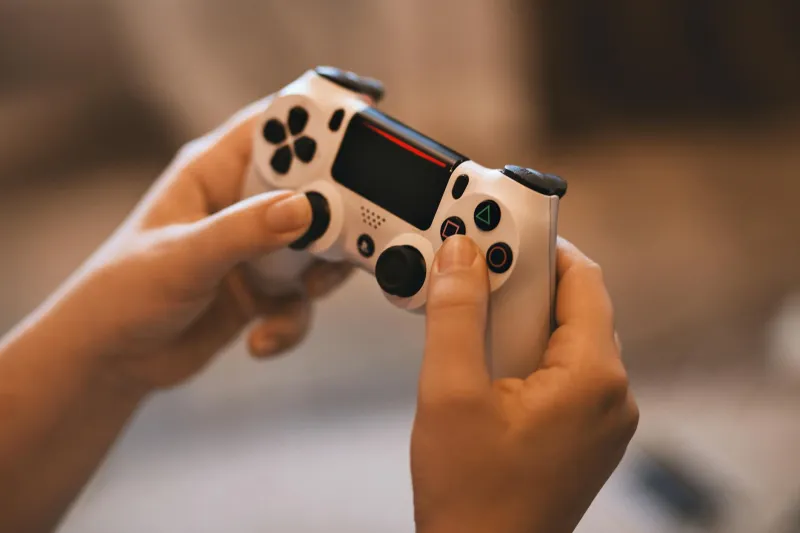
The most common single-thumb implementation maps boost to X (PlayStation) or A (Xbox) and jump to Circle (PlayStation) or B (Xbox). This keeps both inputs accessible to the right thumb while maintaining natural movement patterns for most players.
Alternative configurations place boost on Square (PlayStation) or X (Xbox) with jump remaining on X (PlayStation) or A (Xbox). This variation requires slightly more thumb movement but provides better access to powerslide, which many players map to Circle (PlayStation) or B (Xbox).
Diamond Level Implementation
At Diamond level, players report that single-thumb configurations primarily improve aerial consistency and reduce input errors during high-pressure situations. The simplified input pattern allows for more focus on positioning and game sense rather than mechanical execution.
"I hit Champion for the first time within three weeks of switching," reports a Diamond 2 player. "Not because I suddenly got better mechanically, but because I stopped missing basic aerials under pressure. The consistency improvement was immediate."
Champion Level Adaptations
Champion-level players using single-thumb setups often modify their approach to advanced mechanics. Flip resets and ceiling shots require different muscle memory patterns, but many players report that the improved consistency in basic mechanics more than compensates for the adjustment period in advanced techniques.
The key insight at this level is that single-thumb configurations favor consistency over peak mechanical potential. Players who prioritize reliable execution over highlight-reel mechanics often find the trade-off worthwhile.
Grand Champion and SSL Considerations
At the highest ranks, single-thumb implementation becomes more complex. SSL players using these configurations often develop hybrid approaches that maintain single-thumb consistency for basic mechanics while incorporating additional bindings for advanced techniques.
Some SSL players report using single-thumb configurations for ranked play but switching to traditional setups for mechanical training or freestyle sessions. This hybrid approach allows them to maintain consistency in competitive matches while preserving access to the full mechanical ceiling during practice.
The Mechanical Ceiling Reality: What You Actually Give Up
Honest evaluation of single-thumb configurations requires acknowledging the mechanical limitations they can impose. Certain advanced techniques become more difficult or impossible when boost and jump share the same digit.
Air Roll Timing Complications
Complex air roll sequences that require simultaneous boost and jump inputs while maintaining directional air roll become significantly more challenging with single-thumb setups. Techniques like musty flicks and some flip reset variations require precise timing between boost and jump that's easier to achieve with independent finger control.
Speed vs. Precision Trade-offs
Single-thumb configurations excel at consistent execution but may limit the absolute speed of input sequences. Players who rely on frame-perfect timing for advanced mechanics might find the shared thumb creates slight delays that impact peak performance.
Recovery Mechanics
Aerial recovery sequences that require rapid boost and jump inputs while managing air roll can become more demanding with single-thumb setups. The thumb must switch between inputs more rapidly, which can impact recovery speed in critical situations.
Decision Framework: Determining If Single-Thumb Suits Your Playstyle
The choice between traditional and single-thumb configurations shouldn't be based on rank or mechanical aspirations alone. Several factors should influence the decision:
Consistency vs. Ceiling Priority
Players who prioritize consistent execution of fundamental mechanics often benefit more from single-thumb configurations than those focused on expanding their mechanical ceiling. If your rank is limited by aerial consistency rather than advanced technique mastery, single-thumb may provide immediate benefits.
Physical Comfort and Hand Size
Players with smaller hands or those who experience fatigue during extended play sessions should seriously consider single-thumb options. The ergonomic benefits can enable longer practice sessions and reduce the physical strain that limits improvement.
Playstyle Alignment
Ground-based players who rely more on positioning and boost management than aerial mechanics may find single-thumb configurations align better with their natural tendencies. Conversely, players who built their playstyle around advanced aerial techniques might find the transition more disruptive than beneficial.
Implementation Strategy: Making the Switch Without Destroying Your Rank
Transitioning to single-thumb configuration requires careful planning to minimize the temporary performance impact:
Phase One: Training Pack Adaptation
Spend 2-3 weeks using single-thumb settings exclusively in training packs, focusing on basic aerial mechanics rather than advanced techniques. This builds new muscle memory without the pressure of ranked matches.
Phase Two: Casual Match Testing
Move to casual matches for another 2-3 weeks, focusing on aerial consistency and basic mechanical execution. Avoid attempting advanced mechanics until the new configuration feels natural.
Phase Three: Ranked Integration
Return to ranked play with realistic expectations about temporary rank fluctuation. Most players report 1-2 weeks of slightly decreased performance before the consistency benefits become apparent.
The single-thumb revolution represents a fundamental challenge to Rocket League's controller orthodoxy. While it's not the optimal choice for every player or playstyle, the growing number of successful implementations suggests that conventional wisdom deserves periodic reevaluation. For players struggling with aerial consistency or physical comfort, single-thumb configurations offer a legitimate alternative path to competitive improvement.