Breaking the Comfort Loop: Why Your Ranked Climb Stalled When You Started Beating the Same Players Twice
The Invisible Rank Ceiling
There's a phenomenon happening in Rocket League ranked that nobody talks about, but every Champ-level player experiences. You hit a streak of wins, feel like you're finally breaking through to the next rank, and then... nothing. You plateau. Not because your mechanics stopped improving, not because you stopped practicing, but because you started winning games the wrong way.
The culprit? That innocent "Find New Match" vs "Rematch" decision that appears after every ranked game.
The Adaptation Trap
Here's what happens when you consistently choose rematch against opponents you've beaten: you start optimizing for specific players rather than improving at Rocket League. Your brain, always looking for efficiency, begins recognizing patterns in your opponents' play and develops counters specific to those patterns.
This feels like improvement. You're reading plays better, predicting opponent behavior, making smarter rotational decisions. You win more games against these specific opponents. Your confidence grows.
But you're not actually getting better at Rocket League—you're getting better at beating a handful of specific players with specific tendencies.
How Elite Players Think About Opponents
RZR and other top NA players have talked about this concept in interviews, though they don't always frame it in terms of queue behavior. Elite players actively seek uncomfortable matchups during their ranked grinds. They want to face players whose styles they haven't encountered before.
When jstn queues ranked, he's not looking for easy wins or favorable matchups. He's looking for situations that force him to adapt his mechanics and rotations in real-time. This approach keeps his gameplay flexible and prevents him from developing rigid patterns that higher-level opponents can exploit.
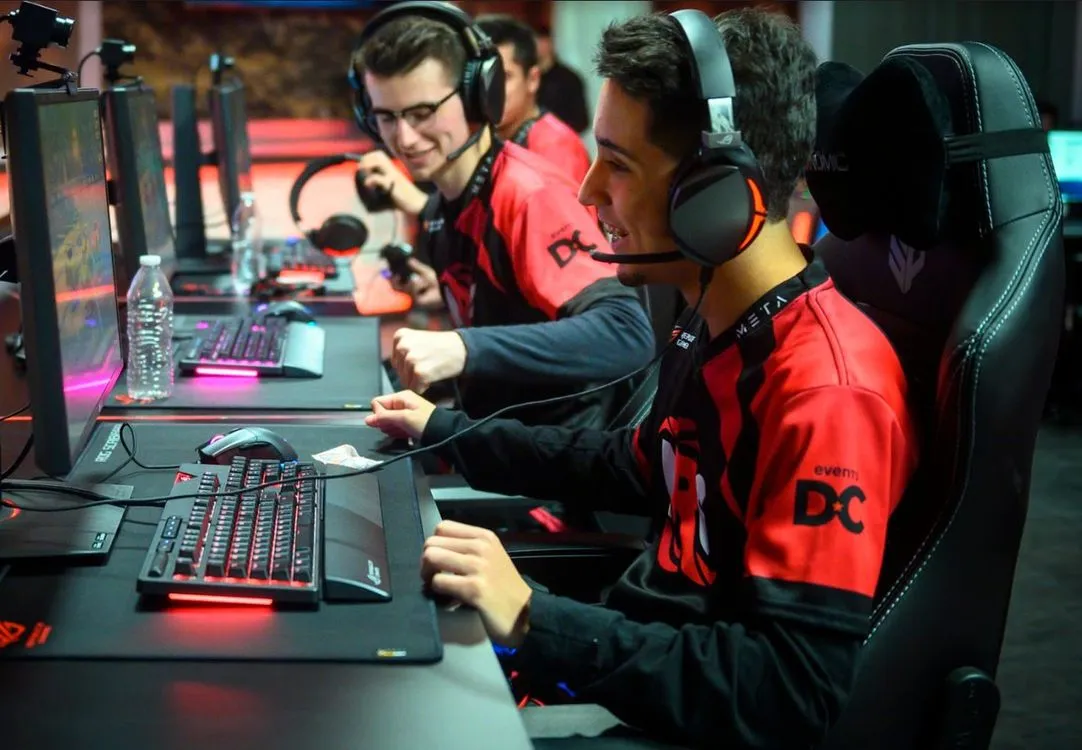 Photo: jstn, via liquipedia.net
The difference in mindset is crucial: intermediate players queue ranked to win games, while elite players queue ranked to encounter problems they haven't solved yet.
The Pattern Recognition Problem
Human brains are pattern recognition machines. When you repeatedly play against the same opponents, your brain starts cataloging their tendencies:
- "This player always goes for ceiling shots from the right corner"
- "This team always rotates clockwise on defense"
- "This goalkeeper always challenges early"
These observations lead to increasingly specific counter-strategies. You start positioning yourself to defend against that ceiling shot, rotating to exploit their defensive patterns, or timing your shots to beat their goalkeeper's challenge timing.
The problem isn't that this approach doesn't work—it does. The problem is that it only works against those specific opponents.
The Skill Transfer Illusion
When you've optimized your play against a specific set of opponents, your rank might temporarily inflate. You're winning games, your MMR is climbing, and you feel like you're improving rapidly.
But then you encounter new opponents with different tendencies, and suddenly your "improved" gameplay doesn't work. The ceiling shot defense you perfected is useless against a team that prefers ground plays. The rotation pattern you exploited doesn't exist in this new matchup. The goalkeeper timing you learned to beat is completely different.
You find yourself losing to players at your current rank, sometimes decisively. This isn't because you've suddenly gotten worse—it's because your improvement was too specific to transfer effectively.
The RLCS Pro Approach to Chaos
Elite players deliberately seek chaotic, unfamiliar situations during their ranked sessions. They want to face teams with unusual rotations, players with unconventional mechanical styles, and matchups that force them to problem-solve in real-time.
Arsenal has mentioned in streams that he prefers playing against teams he's never faced before, especially during preparation for major tournaments. The goal isn't to build confidence through easy wins—it's to stress-test his adaptability under pressure.
 Photo: Arsenal, via www.arsenal.com
This approach builds what psychologists call "transfer-appropriate processing"—skills that work across a wide range of situations rather than optimized solutions for specific scenarios.
The Queue Psychology Experiment
Try this experiment for one week: every time you win a ranked match, choose "Find New Match" instead of "Rematch." Every time you lose, choose "Rematch" if available.
This approach forces you to constantly encounter new challenges while giving you opportunities to learn from defeats. You'll probably win fewer games initially, but the improvement in your adaptability will be dramatic.
Most players do the opposite—they rematch opponents they've beaten and avoid rematching opponents who beat them. This creates a feedback loop that reinforces existing patterns while avoiding opportunities to develop new solutions.
Building Anti-Fragile Gameplay
The goal isn't just to avoid the rematch trap—it's to actively build gameplay that gets stronger when exposed to chaos and unfamiliarity.
Elite players develop what Nassim Taleb calls "anti-fragility"—systems that improve under stress rather than breaking down. In Rocket League terms, this means building mechanical and rotational habits that work better against unfamiliar opponents rather than worse.
This requires a fundamental shift in how you approach ranked play. Instead of trying to win every game, focus on encountering and solving as many different types of problems as possible.
The Meta-Game of Opponent Selection
At the highest levels of Rocket League, there's a meta-game around opponent selection that most players never consider. Elite players track not just their own improvement, but the diversity of challenges they're exposing themselves to.
Some pros keep informal logs of opponent styles they've faced, actively seeking out gaps in their experience. If they realize they haven't faced a strong defensive team recently, they'll queue during times when those teams are likely to be online.
This level of intentionality about opponent diversity is what separates players who plateau at Champ from players who continue improving toward SSL.
The Comfort Zone Economics
Staying in your comfort zone has immediate benefits but long-term costs. Rematching favorable opponents provides short-term rank gains and confidence boosts, but it caps your ultimate potential.
Elite players understand this trade-off and consistently choose long-term improvement over short-term rank inflation. They're willing to lose more games in the present to build skills that will win them games at higher ranks in the future.
Breaking Your Own System
The most dangerous trap for improving players is becoming too good at beating specific types of opponents. Your gameplay becomes systematized around exploiting particular weaknesses rather than building robust, adaptable skills.
Elite players actively work to break their own systems. When they notice they're consistently beating teams with a particular strategy, they deliberately abandon that strategy and force themselves to find new solutions.
This approach feels counterproductive—why abandon something that's working? But it's the difference between temporary rank inflation and permanent skill development.
The Path Forward
If you're stuck in the Champ ranks despite feeling like your mechanics are improving, examine your queue behavior. Are you gravitating toward familiar opponents and comfortable matchups? Are you avoiding rematches against teams that challenge your current approach?
The path to Grand Champion isn't through perfecting your current strategies—it's through developing the adaptability to handle any opponent, any playstyle, any situation. And that requires deliberately seeking out the chaos and unfamiliarity that most players instinctively avoid.
Elite players don't climb ranks by getting better at Rocket League as they currently understand it. They climb ranks by constantly expanding their understanding of what Rocket League can be.