Seeing the Whole Field: How RLCS Forwards Like Rapid and Comm Are Dialing In Camera Settings for the 2025 Counter-Defense Era
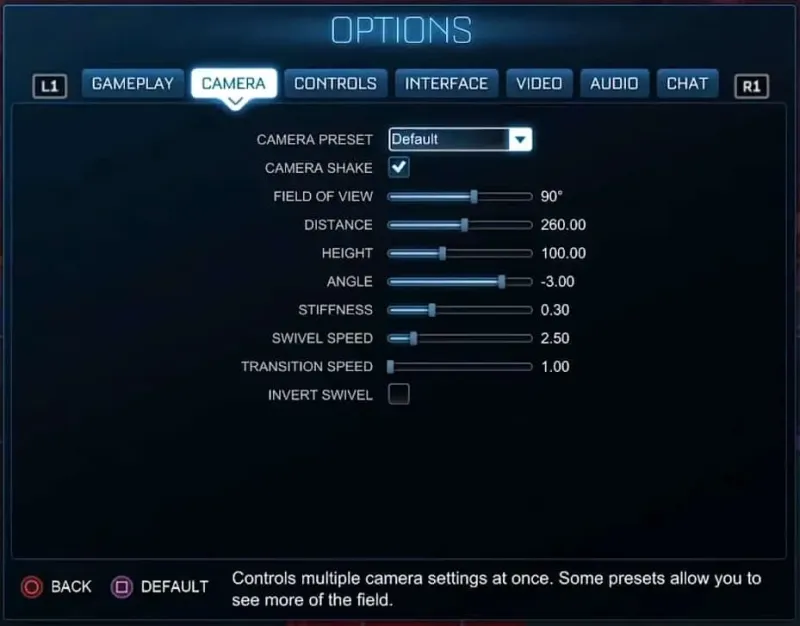
Photo: Rocket League competitive player monitor camera angle esports setup, via lh3.googleusercontent.com
There's a meta shift happening in NA competitive Rocket League that doesn't get talked about enough in the settings community. Defensive play has evolved. Backfield positioning is tighter, recovery lines are smarter, and the window for an aggressive forward to create something from nothing has shrunk considerably. The response from the best offensive players in the region? They're not just adapting their movement — they're adapting what they can see.
Camera settings have always been part of the pro conversation, but usually as a static preference discussion. What's happening in 2025 is more nuanced: forwards are specifically tuning their camera configurations to maintain offensive creativity while staying accountable to defensive positioning reads. And the specifics matter a lot.
The Counter-Defense Problem for Aggressive Forwards
To understand why camera settings are suddenly a front-burner topic for offensive players, you need to understand what's changed defensively.
In 2024 and into 2025, RLCS teams — particularly European squads and increasingly NA teams studying that film — have gotten significantly better at what analysts call compressed backfield positioning. Instead of one dedicated goalie and two players with freedom to push, the best teams are running defensive shapes where all three players maintain recovery awareness even when attacking. The result is that an aggressive NA forward trying to create an overcommit or a 50/50 opportunity finds the defense already reset before the opportunity develops.
For players like Rapid and Comm, who built their offensive identities around speed and early pressure, this creates a specific visibility problem. Their instinct is to push fast and force decisions. But doing that without seeing the backfield reset in real time means committing to situations that aren't there anymore. The camera needs to show them more of the field, faster, so they can make the decision to press or pull back before they've already burned their boost.
Camera Distance: The Most Impactful Variable
If you look at the camera settings of NA's most aggressive forwards and compare them to their counterparts from two seasons ago, the most consistent change is increased camera distance.
Rapid has been documented running a distance in the 270-290 range, which is notably higher than the 260-270 range that was dominant among offensive players 18 months ago. Comm sits in a similar window. The reasoning is straightforward: more distance means more peripheral field coverage in a single frame. You can see where your opponents are recovering to without having to physically rotate your camera.
The tradeoff is that your own car appears smaller on screen, which can make tight mechanical execution — close-range touches, precise aerial contacts — slightly harder to read visually. This is why the shift toward higher distance is specifically a forward's adaptation. A midfielder or goalkeeper at 285 distance might struggle with save timing reads. A forward using that distance gains something more valuable for their role: earlier reads on defensive shape.
If you're a forward in Diamond or Plat trying to develop this kind of awareness, bump your distance up by 10-15 from wherever you're currently sitting and give it two full weeks. The initial disorientation fades faster than you'd expect, and what you gain in field awareness is immediately noticeable.
FOV and Angle: The Supporting Adjustments
Distance doesn't operate in isolation. The players making meaningful camera adjustments in 2025 are treating FOV and angle as part of the same system.
Field of view for most NA pros sits between 100 and 110. Aggressive forwards trending toward counter-defense awareness are clustering at the higher end of that range — 107 to 110. Higher FOV gives you a wider slice of the field in your peripheral vision, which compounds the benefit of increased distance. You're not just seeing more of the field because your camera is further back; you're seeing a wider angle of it simultaneously.
Camera angle (the tilt of the camera relative to your car) is the subtler adjustment. Most players set this and forget it, but forwards dealing with compressed defensive shapes are experimenting with slightly lower angles — moving from the typical -3 to -4 range down toward -4 to -5. A lower angle pulls more of the field into your lower visual field, which is where you need to see defensive positioning. The ball and your car stay visible in the upper portion of the screen while you get more ground-level read below.
Comm's angle has reportedly been in the -4 to -5 range this season, and watching his offensive sequences with that in mind, you can see how it gives him an extra beat of read time on whether the defense is compressed or stretched before he commits to a challenge.
Stiffness Settings: The Camera Shake Factor
One setting that gets overlooked in these conversations is camera stiffness — the value that determines how rigidly the camera follows your car versus how much it floats and lags slightly behind your movement.
Higher stiffness (values in the 0.8-1.0 range) means the camera locks tightly to your car with minimal lag. This is generally preferred for mechanical precision, since your visual reference is always exactly where your car is. Lower stiffness introduces a slight float that some players find disorienting.
For forwards running higher distance and FOV, stiffness at the high end becomes more important, not less. The wider field of view means there's more visual information moving across your screen during fast aerial sequences. High stiffness keeps your car as a stable anchor in that wider frame, making it easier to process the peripheral information without losing track of your own position.
Both Rapid and Comm run high stiffness values — this isn't coincidental. It's the balancing mechanism that makes the higher distance and FOV settings feel stable rather than chaotic.
Practical Tuning for Non-Pros
If you want to experiment with this system yourself, here's a baseline to start from:
| Setting | Suggested Starting Point |
|---|---|
| Camera Distance | 275 |
| FOV | 107 |
| Camera Angle | -4 |
| Camera Stiffness | 0.90 |
The goal of this configuration isn't to copy what Rapid or Comm runs exactly — it's to give yourself more field information at the cost of some close-range visual precision. For forwards who are losing offensive opportunities because they're committing blind, that trade is almost always worth it.
Give it ten hours of ranked time before you evaluate. Camera changes feel wrong for a while before they feel right, and the players who abandon them after three games never get to experience the actual benefit. The pros who are running these settings didn't settle on them in a day — they built toward them deliberately, over time, with a specific tactical problem in mind.
That's the mindset. The settings are just the tool.