Mirror Image: The Left-Handed NA Players Quietly Flipping the Controller Meta
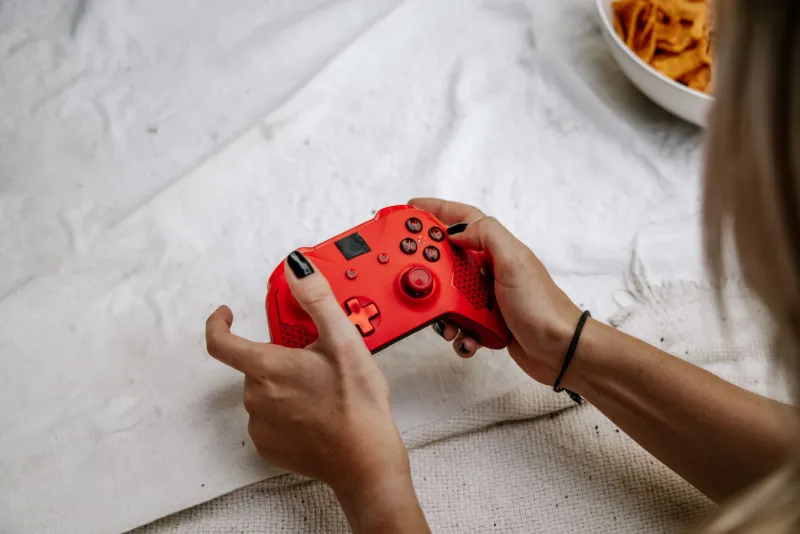
The Rocket League controller config conversation has been running the same plays for years. Boost on R2 or right trigger. Jump on X or A. Air roll on one of the shoulder buttons. The template is so deeply baked into the community's DNA that questioning it feels almost radical.
But a small and growing number of competitive NA players are doing exactly that — and they're not just tweaking bindings at the margins. They're flipping the entire layout to a fully mirrored configuration that inverts the conventional right-hand-dominant template. And some of them are climbing.
This isn't a gimmick story. It's a physiological one.
The Right-Hand Assumption Nobody Questioned
When Rocket League's default control scheme was designed, it followed the same logic as virtually every action game before it: the right hand, being dominant for the majority of players, handles the most mechanically demanding inputs. In practice, that means boost and jump — the two most frequently activated buttons in any given match — are mapped to the right side of the controller.
For right-handed players, this is intuitive. Your dominant hand's thumb and index finger are managing the most critical timing-sensitive inputs while your left thumb handles directional movement. The cognitive load is distributed in a way that matches your natural hand hierarchy.
For left-handed players, that distribution is inverted. Your non-dominant hand is handling boost timing and jump execution while your dominant hand is doing the comparatively simpler job of directional steering. It's like asking a left-handed pitcher to throw with their right arm because the mound was built that way.
What a Mirror Config Actually Looks Like
A fully mirrored Rocket League config doesn't just swap one or two bindings. It rebuilds the entire layout around left-hand primacy. Boost moves to L2 or left trigger. Jump moves to the left face buttons. Air roll and powerslide shift to the right shoulder cluster. Directional control — the analog stick work — stays largely the same because both hands are involved in that anyway.
The result is a setup where a left-handed player's dominant hand is managing the timing-sensitive boost and jump inputs, while their right hand handles the supportive functions. In theory, this should reduce input errors on the most mechanically demanding actions.
In practice, the players experimenting with this in ranked play report a significant adjustment period — we're talking weeks, not days — followed by a ceiling lift on mechanics that previously felt inconsistent. Aerial timing in particular seems to benefit, which makes sense: jump timing is one of the most precision-dependent inputs in the game, and executing it with your dominant hand changes the accuracy floor.
The Physiology Behind the Trend
Hand dominance isn't just about which hand you write with. It reflects deeper neurological patterns in fine motor control, timing precision, and muscle memory formation. Studies on hand dominance in precision tasks consistently show that dominant-hand performance on timing-sensitive movements is measurably more accurate — not by huge margins, but by the kind of margins that matter at high-level competitive play.
In Rocket League, where the difference between a successful flip reset and a whiff can be a single frame, those margins are everything. If your boost timing is managed by your non-dominant hand, you're working against your own neurology every time you execute a complex aerial.
This isn't to say right-handed players have an unfair advantage — they don't, because the default config aligns with their natural dominance. But for the roughly 10–12% of the player base that's left-handed, the default config may be creating a consistent, invisible ceiling on mechanical precision.
What the Competitive Data Suggests
Hard data on left-handed mirror configs in ranked Rocket League is limited, partly because players experimenting with them are rarely broadcasting it. But the anecdotal evidence from the NA competitive community is consistent enough to take seriously.
Several SSL-ranked players in NA have discussed running partial mirror configs — specifically moving boost to the left trigger — in community forums and Discord servers over the past 12 months. The feedback pattern is notable: initial ranking dips during the transition period, followed by a recovery that often lands above the pre-switch baseline. That's a meaningful signal.
What's harder to quantify is whether the improvement comes from the handedness alignment itself or simply from the forced mechanical reset that any major config change produces. When you rebuild your muscle memory from scratch, you often shed bad habits alongside the good ones. Separating those effects requires more controlled observation than the community currently has access to.
The Broader Question for Everyone
Here's what makes this story relevant beyond the left-handed minority: it forces a question that the entire Rocket League config community should be sitting with. How much of the "standard" config template is actually optimal, and how much of it is just inherited convention?
The community has spent years optimizing within the default framework — debating deadzone shapes, camera distances, sensitivity curves — while largely leaving the foundational button layout untouched. The mirror config trend suggests there might be more room for structural rethinking than most players have considered.
You don't have to be left-handed to ask whether your current binding layout is actually matched to your personal motor control patterns. Some right-handed players have found that moving certain secondary inputs — powerslide, air roll directional — to their left hand improves consistency because those mechanics require sustained pressure rather than precise timing, which is a different kind of motor demand.
Should You Try It?
If you're right-handed and running a config that feels natural, probably not. The risk-reward calculus doesn't favor a wholesale layout rebuild without a clear physiological reason.
But if you're left-handed and you've hit a mechanical ceiling that training alone hasn't broken — if your aerial timing feels consistently slightly off, if your boost management in pressure situations never quite matches what you're visualizing — it might be worth spending a month in free play rebuilding your layout around your dominant hand.
The transition will be brutal. Your rank will dip. Your muscle memory will fight you for weeks. But if the physiology argument holds — and there's good reason to think it does — the ceiling on the other side might be higher than anything you've accessed before.
The standard config template has been the default for so long that questioning it feels almost rebellious. Maybe that's exactly why it's worth questioning.