Why Pros Don't Practice Like You Do — And Why Copying Them Might Actually Hurt Your Rank
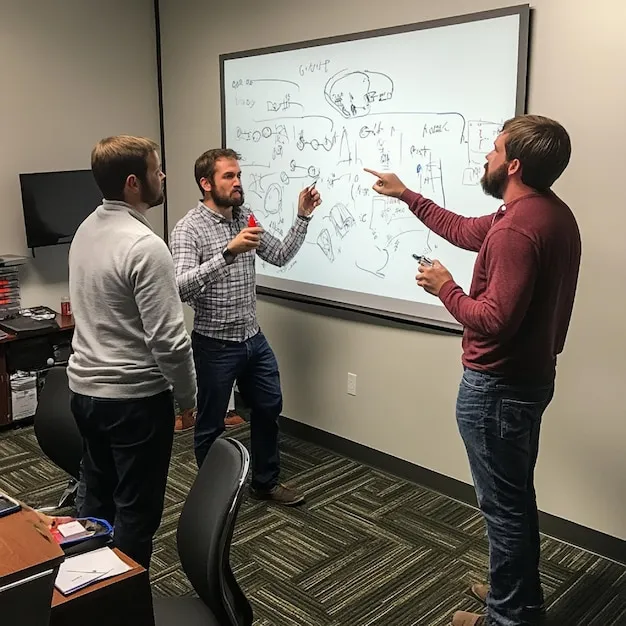
Photo: esports team practice session strategy whiteboard coaching, via img.freepik.com
Scroll through any Rocket League coaching thread or Discord server and you'll find the same advice recycled endlessly: play more ranked, watch your replays, warm up in freeplay. It's not wrong, exactly. But it's incomplete in a way that creates a serious ceiling for players who follow it religiously.
Here's the thing most guides won't tell you: RLCS pros don't primarily develop their skills through ranked play. And the gap between how they actually practice versus what most high-rank solo queue players do is wider than almost anyone in the community acknowledges.
The Scrim Format Nobody Talks About
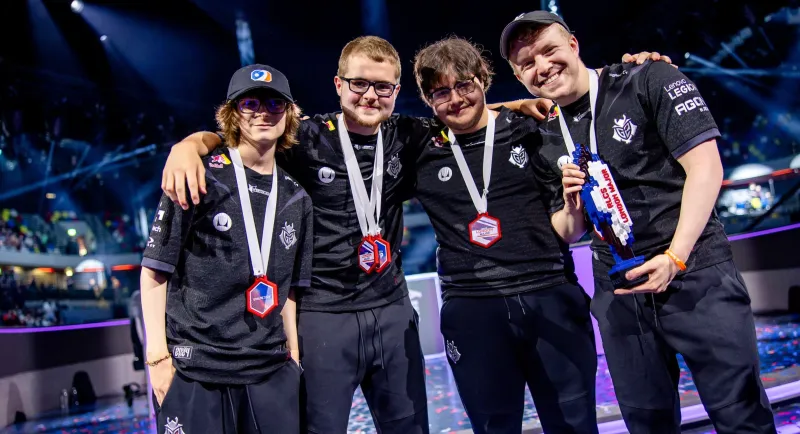
For pro teams, the backbone of skill development isn't ranked. It's scrims — structured, scheduled practice sessions against other organized teams, run with coaching oversight and explicit goals for each session.
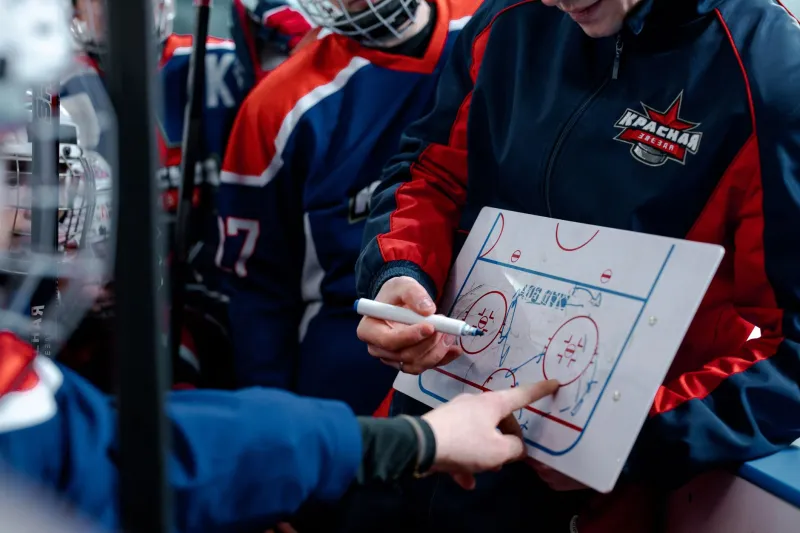
The difference from ranked isn't just the opponent quality. It's the intentionality. In a pro scrim block, teams might spend an entire session working on one specific scenario: defending against a particular kickoff style, running a specific rotation pattern under pressure, or forcing themselves into deficit situations to practice comeback mechanics.
Coaching staff at organizations like NRG and G2 have been public about the fact that scrim sessions often look nothing like a normal ranked game. The score doesn't always matter. What matters is whether the players are executing the specific skill or system being drilled that day.
Ranked, by contrast, is chaos. Every game is different. Every opponent is unpredictable. That variety is valuable for adaptability, but it's a terrible environment for deliberately building a specific skill. If you're trying to improve your aerial defense, you'll get maybe three or four relevant aerial defense situations per ranked game — and half of them will be in contexts that don't isolate the skill cleanly.
What Freeplay Actually Develops (And What It Doesn't)
Freeplay mastery is real, and it matters. Players who spend serious time in freeplay develop ball control intuition that shows up in games in ways that are hard to quantify but unmistakable to watch.
But here's the gap that freeplay creates: it trains execution without pressure, reads, or positioning context. You can become elite at hitting a specific aerial sequence in freeplay and still completely fall apart trying to apply it in a ranked game, because ranked requires you to simultaneously manage boost, rotation, opponent reads, and positioning — none of which exist in freeplay.
Pros bridge this gap through scrims where specific mechanics are practiced in live game context, not in isolation. A pro working on their flip reset isn't just doing it in freeplay. They're running scrim situations where the reset comes up organically, so the muscle memory builds with all the surrounding context attached.
For solo queue players without access to scrim partners, the closest equivalent is 1v1 ranked — not as a rank grind, but as a forced context for specific skill application. 1v1 removes team rotation complexity and forces you to execute your mechanics against a live opponent with real pressure. It's not a perfect substitute for scrims, but it's a significantly better training environment than freeplay for developing game-applicable mechanics.
The Custom Training Hierarchy
Pro players and their coaches use custom training packs very differently than most ranked grinders. The typical solo queue player grabs a popular pack, runs it until they can hit most shots, and moves on. Pro-level training is more structured.
The approach tends to follow a deliberate hierarchy:
Isolation packs target a single micro-skill — a specific contact angle, a particular aerial turn, one type of save. These are used to build the raw mechanical pattern.
Sequence packs chain two or three related skills together, forcing the player to transition between them. This is where the skill starts to feel like a real game action rather than a drill.
Scenario packs place the skill inside a realistic game situation with positioning context — a specific offensive setup, a particular defensive read. This is where the skill becomes usable in ranked.
Most solo queue players only use isolation packs and wonder why they can't apply what they've trained. The sequence and scenario layers are what make the skill transferable.
The Rank Grind vs. Skill Development Conflict
Here's the uncomfortable truth that most content in the Rocket League space dances around: ranked and skill development are not the same goal, and optimizing for one can actively work against the other.
Ranked rewards consistency and decision-making in your current skill set. Skill development requires attempting things you're not yet consistent at, which means more mistakes, which means lost games, which means rank pressure.
Pros don't feel this conflict because their rank isn't the measure of their development — their scrim performance is. A pro can spend a month developing a new mechanic in scrims, losing plenty of scrim games in the process, and their RLCS roster spot isn't at risk because they dropped rank.
For solo queue players, the conflict is real. The solution isn't to ignore ranked, but to be explicit about which sessions are development sessions (where you're consciously working on something new and accepting the short-term rank cost) and which are performance sessions (where you're playing your best current game to climb).
Mixing those two goals in the same session is how players stay stuck. You're not developing because you're too worried about rank. You're not climbing because you're not playing your best current game. The pros figured out how to separate these environments. You need to do the same thing — even if your version looks different from theirs.
Building Your Own Scrim Equivalent
If you're serious about closing the gap, here's a practical framework:
- Find a 1v1 partner at your rank who's also actively trying to improve. Run dedicated 1v1 sessions focused on a specific skill, not on winning.
- Use Discord servers like the Rocket League Coaching Discord to find players for team-based practice sessions that mimic scrim structure.
- Separate your week intentionally: two or three sessions of deliberate skill work, two or three sessions of straight ranked performance.
The pros aren't practicing more than you. They're practicing smarter — with structure, intention, and a clear separation between development and performance. That's the actual secret, and it's available to anyone willing to build the discipline around it.