The Patience Paradox: Why Reacting Slower Makes NA's Best Defenders Almost Impossible to Beat
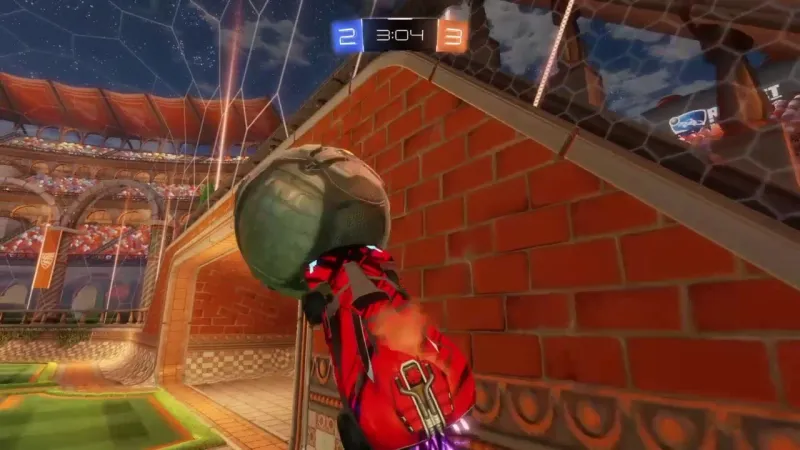
Photo: rocket league goalkeeper defensive save competitive esports, via i.ytimg.com
The Patience Paradox: Why Reacting Slower Makes NA's Best Defenders Almost Impossible to Beat
Every Rocket League coach eventually runs into the same conversation. A Diamond or Plat player pulls up a replay of a goal they gave up and says something like, 'I just reacted too slow.' And the coach nods — but privately knows the opposite is almost certainly true.
The most common defensive mistake at mid-rank isn't slow reaction time. It's reacting too fast.
This is the patience paradox, and it's one of the clearest separators between how North America's elite RLCS rosters defend in 2025 versus how the rest of the ladder tries to. Players like Arsenal and Chronic have built a deliberate habit of holding position for a fraction of a second longer than feels comfortable — and that tiny window of restraint is producing cleaner touches, sharper saves, and dramatically fewer situations where they're out of position for a follow-up.
 Photo: Arsenal, via football-talk.co.uk
What 'Too Fast' Actually Looks Like
Picture a common scenario: the opponent carries the ball up the right side, cuts toward the middle, and takes a shot. In a Diamond lobby, the defending player commits to a shadow position the moment the carrier starts their cut. By the time the shot actually releases, the defender has already moved — and the shot goes where they just were.
This is an early read. It feels like a read. It has the cognitive texture of smart defensive play. But it's actually a vulnerability, because it's based on prediction rather than information.
The defender committed to a direction before the attacker's car angle, boost usage, and ball touch confirmed what was about to happen. They guessed. And at higher levels of play, elite attackers are actively trained to bait exactly that kind of premature commitment.
The Concept of Passive Waiting
What Arsenal and Chronic do differently isn't complicated to describe, but it's genuinely hard to execute under pressure: they wait for the ball to leave the attacker's car before initiating their defensive movement.
In coaching communities this is sometimes called passive waiting or read delay — the deliberate practice of absorbing an extra fraction of a second of visual information before committing to a save trajectory. Instead of predicting where the ball is going, they wait until the ball is actually going there.
The time difference we're talking about is small. We're not talking about a full second of hesitation. We're talking about 150-250 milliseconds of additional patience — the difference between moving on the attacker's setup motion versus moving on confirmed ball trajectory.
But in a game where a well-placed shot crosses the goal in under half a second, that information gap is enormous. Committing 200ms early based on a wrong read means you're already out of position before the shot even releases.
Why Diamond Players Can't Stop Doing It
The early-read habit is deeply reinforced by the way ranked Rocket League plays out at Diamond and below. At those ranks, attackers are less deceptive. Their shot angles are more telegraphed, their setups more predictable. Early reads work often enough to feel correct — which means the habit gets cemented through positive reinforcement.
Then players hit Champ and Grand Champ lobbies where attackers are actively using fakes, double-touches, and redirects to exploit exactly the defensive commitment timing that worked in Diamond. Suddenly the early-read instinct becomes a liability, but it's already deeply wired in.
This is why so many players plateau at Champ despite having strong mechanical skills. Their mechanics are fine. Their read timing is the problem.
How Pros Train the Delay
The good news is that read delay is a trainable cognitive habit. Here are three approaches that competitive players use to start building it:
The Shadow Hold Drill In free play or with a training partner, practice shadow defending without committing to any save until the ball leaves the attacker's car. Your only job is to maintain positioning pressure without initiating a challenge. This sounds passive but it's exhausting — every instinct is screaming at you to go for the ball. Resisting that impulse is the rep.
Replay Tagging Pull your last ten ranked replays and tag every goal you gave up. For each one, identify the exact moment you initiated your save movement. Was it before or after the ball left the attacker? You'll likely find that 60-70% of your conceded goals involved an early movement commitment. Seeing the pattern is half the battle.
The Bait Game In 1v1 custom lobbies, play an entire session where your only goal is to make the attacker change direction at least once before you commit. Don't care about winning. Care about forcing the attacker to show you what they're actually doing before you respond. This trains you to treat the attacker's setup as information rather than a threat to react to immediately.
The Demo Exposure Problem
One underappreciated consequence of early reads is demo vulnerability. When you commit to a save trajectory too early and the attacker redirects or fakes, you're not just out of position for the shot — you're often moving fast in the wrong direction with no boost to recover. That's a perfect demolition setup.
Chronicle this across a full ranked session and you'll find that a significant portion of your demo deaths happen in defensive situations where you over-committed. Arsenal is particularly disciplined about this. Watch his defensive positioning in RLCS 2025 match VODs and notice how rarely he's caught moving fast in the wrong direction. That's not reaction speed — that's read discipline.
Slower to Save More
The mental shift required here is uncomfortable. It feels like you're giving the attacker more time. It feels like passivity. But what you're actually doing is collecting more information before you spend your defensive resources — and in a game where boost, positioning, and momentum are finite, spending them on confirmed information rather than predictions is always the better trade.
The players who figure this out are the ones who suddenly find their save percentage climbing without adding any new mechanics to their game. They're not saving more because they got faster. They're saving more because they stopped guessing.
Patience isn't passive. In Rocket League, at the highest levels, it's the most active skill on the field.