Win Before You Touch It: How RLCS 2025 Pros Are Solving 50/50s With Body Angle Alone
Watch a Diamond lobby for ten minutes and you'll notice something consistent: when two cars collide on a contested ball, both players look equally surprised by what happens next. One car wins possession almost by accident. The other spins out, chases, and burns boost trying to recover a situation that was already lost before contact happened.
Now pull up any RLCS 2025 broadcast and watch the same moment. The outcome still looks chaotic to the casual eye — but when you slow it down, you start seeing something deliberate. Players like Jstn and Zen aren't just arriving at the ball faster. They're arriving at a specific angle, with a specific car orientation, that dictates where the ball goes before they ever make contact.
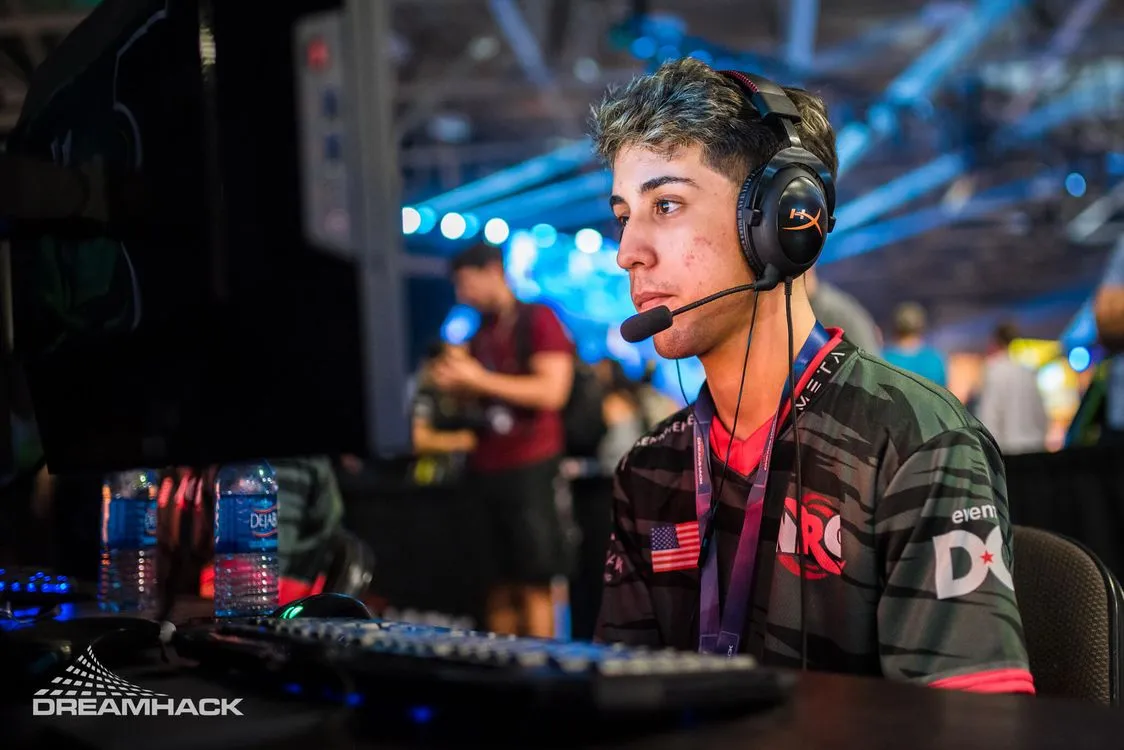 Photo: Jstn, via liquipedia.net
That's the deadball blueprint. And it's the most underrated skill gap between Diamond and Supersonic Legend in 2025.
Why 50/50s Feel Random (And Why They Aren't)
The physics engine in Rocket League calculates ball trajectory based on the velocity, angle, and surface area of the car that strikes it. When two cars arrive simultaneously, the dominant force wins — but 'dominant' doesn't mean fastest. It means most optimally oriented.
Most mid-rank players approach contested balls trying to beat the opponent to the spot. That instinct isn't wrong, but it's incomplete. Getting there first with a flat, neutral car angle is actually worse than arriving a fraction of a second later with deliberate nose-down tilt and lateral offset. The ball doesn't care who arrived first. It responds to geometry.
This is what Jstn figured out early in his career and what you can see Zen executing at an elite level in RLCS 2025 play: the outcome of a 50/50 is largely determined in the 400-600 milliseconds before impact, not at the moment of contact itself.
The Three Angles That Change Everything
Pro-level pre-contact positioning breaks down into three adjustable variables. Once you understand these, you'll never watch a 50/50 the same way again.
Nose Angle (Pitch) A slight nose-down tilt drives the ball downward on contact, keeping it on the ground and harder to contest in the air. Nose-up contact sends the ball skyward — useful for aerial setups, but a liability in defensive situations where you need to clear with control. Zen in particular is famous for arriving at contested balls with a subtle forward lean that punches the ball into the ground rather than launching it into an unpredictable arc.
Lateral Offset Instead of driving directly into the ball's center, elite players approach from a slight lateral offset — essentially clipping the side of the ball rather than hitting it flush. This imparts spin and directional control that a straight-on hit simply can't produce. Think of it like a billiards shot: the cue ball's path is determined by where you strike, not just how hard.
Speed Modulation This one surprises people. Going full throttle into every 50/50 is a Diamond habit, not a pro one. RLCS players actively modulate their speed in the last 20-30 feet before contact to control the energy transfer. A lower-speed angled hit can produce more favorable ball direction than a max-speed flush strike. This is why you'll see pros appear to 'coast' into challenges that look effortless — they're not being passive, they're being precise.
How to Read the Setup in Real Time
The challenge with pre-contact positioning is that you have to decide your angle before you fully know what the opponent is doing. This is where camera settings and field awareness intersect with pure mechanics.
Pros like Jstn run camera distances that let them track both the ball and the opponent's car simultaneously in the approach window. If you're zoomed in tight, you're flying blind on the opponent's trajectory — and you can't optimize your angle relative to theirs.
A practical adjustment: in free play, practice approaching balls while keeping your eyes off the ball itself. Instead, look at the space around the ball. Where is the opponent car? What angle are they coming from? Then set your own approach to counteract theirs. This is called positional shadowing in coaching circles, and it's the cognitive habit that separates reactive 50/50 players from proactive ones.
The Training Drill You're Not Doing
Here's a simple drill that directly builds pre-contact positioning instincts:
- Load a custom training pack with slow, ground-level balls rolling toward your half.
- Instead of hitting them straight, set a cone (or mental marker) at a 30-degree offset from the ball's path.
- Approach from that offset angle and practice controlling where the ball goes — left corner, right corner, straight up the middle — using only your car's nose angle and lateral offset. No power shots.
- Once you can consistently direct the ball to your intended target from the offset approach, add a second player (or a bot) and practice maintaining your angle while adjusting to their position.
Do this for 15 minutes before ranked sessions and you'll start noticing contested balls resolving in your favor more often. Not because you got lucky. Because you engineered it.
What the Broadcast Isn't Showing You
One reason this skill stays invisible to most players is that broadcast cameras prioritize the ball, not the cars approaching it. The decisive positioning moment happens off-screen or in the corner of the frame — and by the time the camera catches up, the outcome looks inevitable.
If you want to study this properly, pull VODs of RLCS 2025 matches and use the player-cam feeds available on some streams. Watch Jstn's car angle on every 50/50 in the first two minutes of a game. You'll see him testing the opponent — probing with different approach angles to understand how they respond under pressure. By the third or fourth contest, he's already dialed in their tendencies and is engineering the outcome before the ball is anywhere near them.
That's not mechanical genius. That's a trained cognitive system built on thousands of reps of deliberate pre-contact positioning practice.
The Takeaway
50/50s are not random. They never were. The players making them look random are the ones who haven't done the work to understand what's actually happening in that half-second window before impact.
If you're stuck in Diamond and grinding ranked without seeing rank movement, audit your 50/50 replays first. Nine times out of ten, you'll find a player arriving at the ball with a neutral, uncommitted angle — hoping physics works out in their favor. It won't. Not consistently.
Own the geometry. Win before you touch it.